Hacktivism Explained: How Political Hacking Works and What It Costs You
Political hackers often target your data not for profit but to disrupt services, creating collateral damage that slows your daily routine without stealing money.

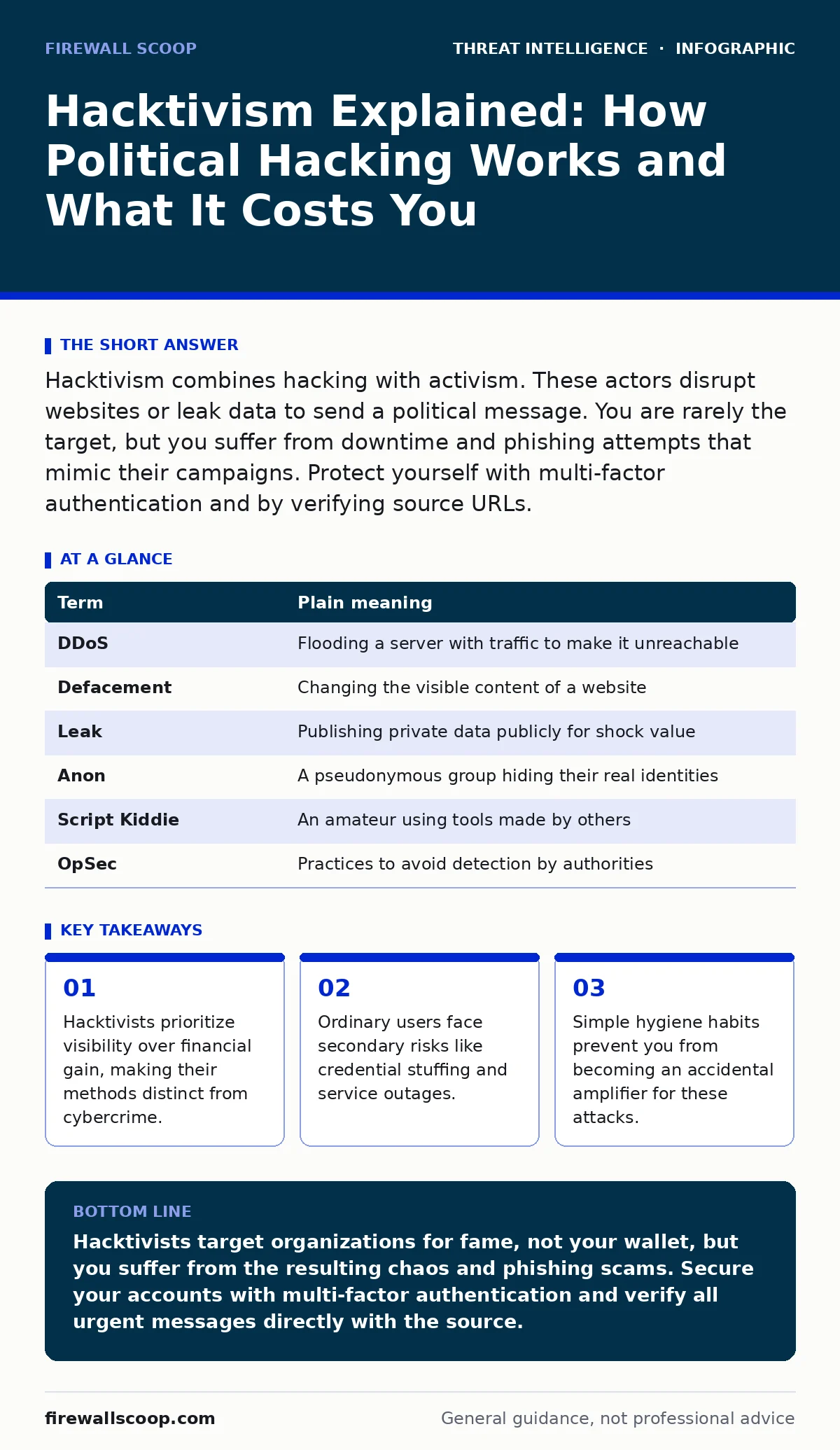
Hacktivism combines hacking with activism. These actors disrupt websites or leak data to send a political message. You are rarely the target, but you suffer from downtime and phishing attempts that mimic their campaigns. Protect yourself with multi-factor authentication and by verifying source URLs.
The Protest Banner on Your Digital Door
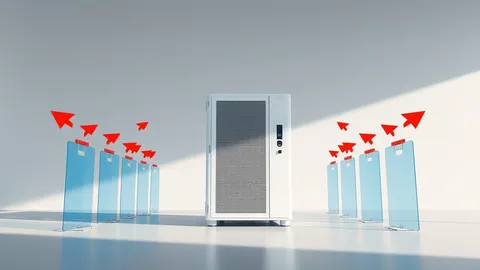
Imagine a city street where protesters paint over a storefront window. They do not break in to steal cash registers. They do not care about the inventory inside. Their goal is to cover the glass with a message so that customers cannot see in. The store owner suffers because business stops. The protesters achieve their aim by creating a spectacle.
Hacktivism works the same way. These actors use technical skills to disrupt digital services or expose information. They want attention for a cause. They do not want your credit card numbers. This distinction changes how you should think about the risk. You are not the prize. You are the bystander standing near the painted window.
Why They Do Not Want Your Money
Most cyberattacks are driven by profit. Criminal groups steal data to sell it on the dark web or to extort victims. Hacktivists operate on a different incentive structure. They seek reputational damage for their target. They want to embarrass a corporation or a government agency.
This means their tactics often involve defacement. They replace the homepage of a website with their own message. They might publish internal emails to cause scandal. They rarely install ransomware. Understanding this motive helps you predict what happens next. When a hacktivist group announces a campaign, expect disruption, not theft.
The Hidden Cost to Everyday Users
You might think this has nothing to do with you. If you do not support the cause, why should you care? The cost is indirect but real. When a major service goes down due to a distributed denial-of-service attack, you cannot work. When a company’s data is leaked, your email address might end up in spam lists.
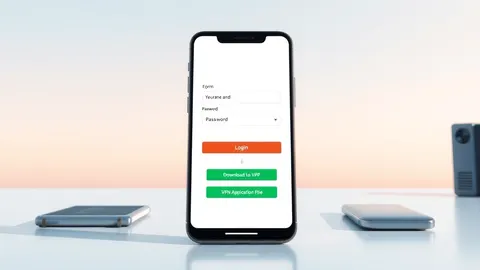
Hacktivists often trigger a wave of phishing attempts. Impersonators send emails claiming to be from the victimized company. They ask you to verify your account because of a "security breach." This is a secondary attack. The initial hack was political. The follow-up is financial. You become the target because the original event created confusion.
Terms You Need to Know
To understand these threats, you need to speak the language. These terms appear in every report on political hacking. Knowing them helps you separate signal from noise.
| Term | Plain meaning |
|---|---|
| DDoS | Flooding a server with traffic to make it unreachable |
| Defacement | Changing the visible content of a website |
| Leak | Publishing private data publicly for shock value |
| Anon | A pseudonymous group hiding their real identities |
| Script Kiddie | An amateur using tools made by others |
| OpSec | Practices to avoid detection by authorities |
Where the Usual Advice Fails
Standard security advice tells you to use strong passwords. This helps against brute force attacks. It does not help against a hacktivist who publishes a database they already stole. If your password is in that leak, strength matters less. The damage is done.
This is where threat intelligence platforms become useful. They aggregate data from many sources. They tell you if your credentials have appeared in known leaks. You can check your status without waiting for a breach notice. Proactive checking beats reactive password resets. It allows you to address the problem before an impersonator contacts you.
Simple Habits for Political Noise
You cannot stop a political protest. You can, however, secure your own door. The following steps reduce your exposure to the collateral damage of hacktivism. They are low effort but high impact.
- Enable multi-factor authentication on all accounts. This stops attackers who use leaked passwords. It adds a layer they cannot steal from a database.
- Verify the sender of urgent emails. If a company you use announces a hack, wait for their official statement. Do not click links in unsolicited messages.
- Use a password manager. This ensures every account has a unique password. One leak does not compromise your entire digital life.
When to Watch for Impersonation
After a high-profile hack, the noise increases. Scammers rush to capitalize on the confusion. They send emails that look official. They use the logo of the victimized company. They create a sense of urgency.
This is where user and entity behavior analytics can help organizations detect anomalies. For you, it means looking at the context. Did you expect this email? Does the URL match the company’s domain? If something feels off, it probably is. Do not rush. The attackers rely on your panic.
The Role of Community Defense
Individual users are small targets. But when many people fall for the same phishing scam, the impact grows. Hacktivists win when their message spreads. They lose when their targets remain secure.
You can contribute to this defense. Share accurate information. Do not amplify unverified claims. Support organizations that invest in security. This includes using services that employ honeypots to detect attackers early. The more difficult you make it for scammers, the less attractive the collateral damage becomes.
Understanding the Attack Path
Hacktivists often use known techniques. They follow a predictable path. They find a vulnerability. They exploit it. They announce it. This is not advanced persistent threat activity. It is often sloppy.
You can learn more about these patterns by studying attack path analysis. This framework maps how attackers move. It helps you understand where the weak points are. For a beginner, knowing that the entry point is often a weak password is enough. Secure that point, and you remove the easiest door.
Final Thoughts on Digital Activism
Hacktivism is a form of protest. It uses technology as the medium. It causes disruption. It rarely causes direct financial loss to you. But it creates an environment where scams thrive.
Stay calm. Verify sources. Secure your accounts. You do not need to understand the politics. You just need to understand the mechanics. By focusing on the technical reality, you protect yourself from the noise.
Key takeaways
- Hacktivists prioritize visibility over financial gain, making their methods distinct from cybercrime.
- Ordinary users face secondary risks like credential stuffing and service outages.
- Simple hygiene habits prevent you from becoming an accidental amplifier for these attacks.
Hacktivists target organizations for fame, not your wallet, but you suffer from the resulting chaos and phishing scams. Secure your accounts with multi-factor authentication and verify all urgent messages directly with the source.
Frequently asked questions
Is hacktivism illegal?
Yes, unauthorized access to computer systems is illegal in most jurisdictions, regardless of the political motive.
Can I get hacked just by visiting a hacktivist website?
Unlikely, unless you download files or click on malicious links hosted on compromised third-party sites.
How do I know if my data was leaked?
Use a reputable breach notification service to check if your email address appears in known public databases.
Should I report hacktivist activities?
Yes, report suspicious activity to the relevant platform or authorities to help contain the spread of disinformation.
How this guide was produced: written by the Firewall Scoop editorial team with AI assistance, checked against the public references listed below, and reviewed when the facts change. See our editorial policy or report an error.