Password Cracking Explained: How Attackers Break Your Codes
Attackers rarely guess your password; they use automated tools to test billions of stolen combinations against your account data in seconds.
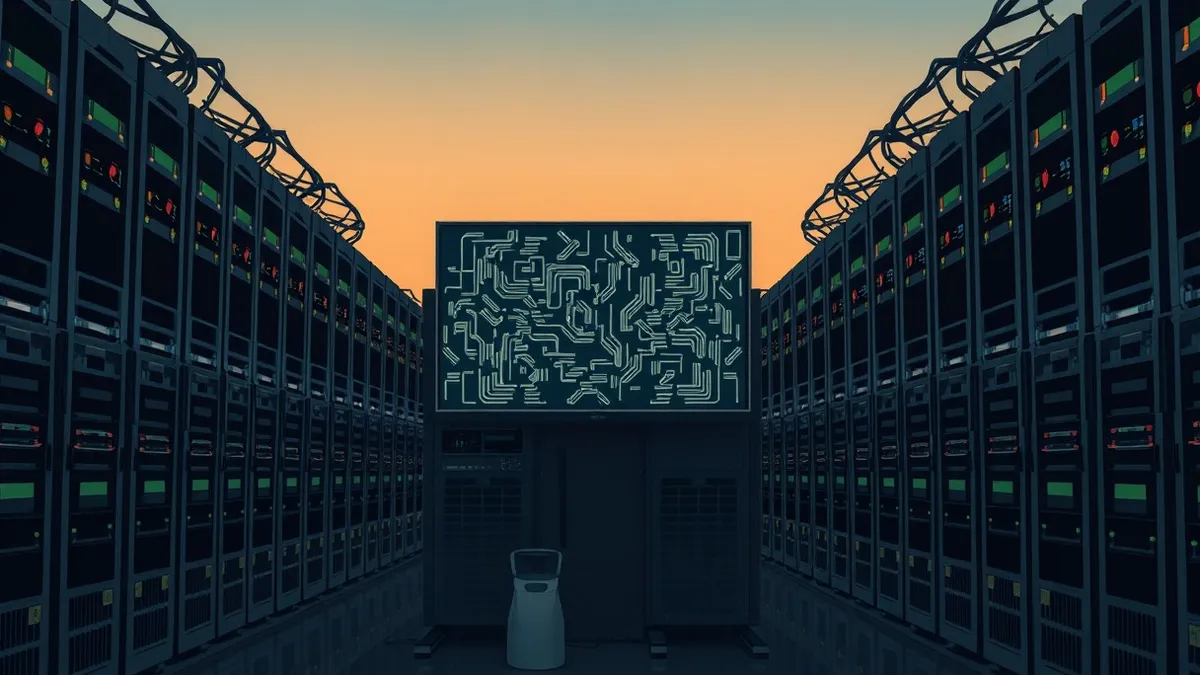
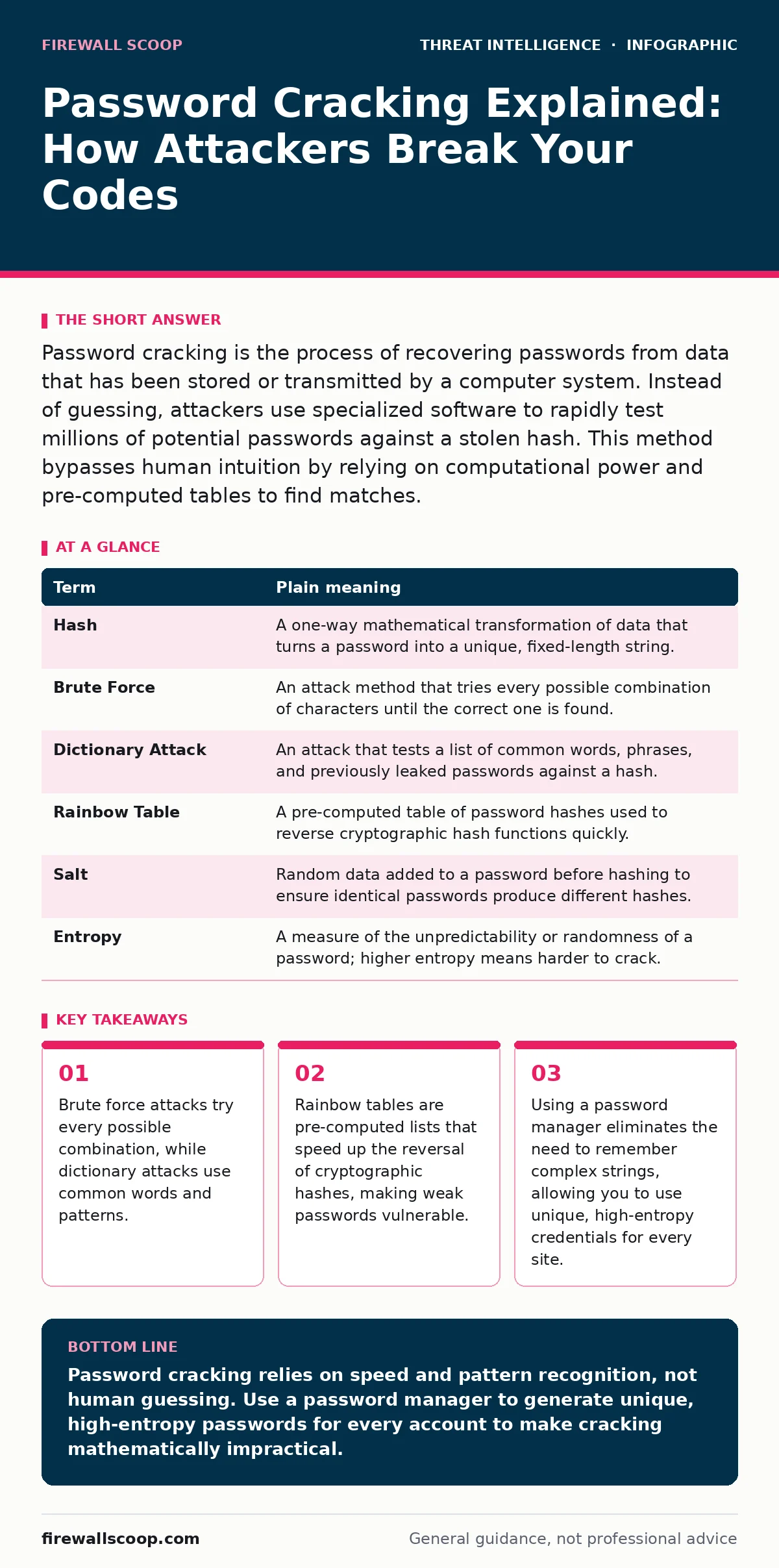
Password cracking is the process of recovering passwords from data that has been stored or transmitted by a computer system. Instead of guessing, attackers use specialized software to rapidly test millions of potential passwords against a stolen hash. This method bypasses human intuition by relying on computational power and pre-computed tables to find matches.
The Library of Lost Keys
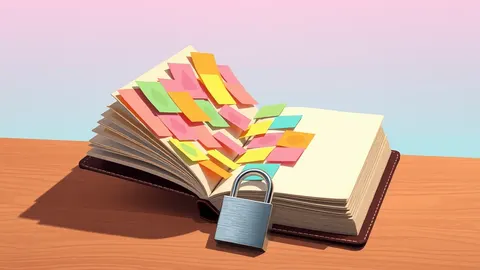
Imagine you are trying to open a specific book in a massive library. You do not know the title, but you have a catalog card with a strange code on it. A brute force attack is like checking every single book on every shelf, one by one, until you find the match. It is slow, but it eventually works. A dictionary attack is like checking only the most popular books first. It is faster, but it fails if your book is obscure. Password cracking is the digital equivalent of these library searches, but happening at speeds humans cannot perceive.
The Mechanics of the Crack
Attackers do not see your actual password. They see a hash, which is a fixed-length string of characters generated by a mathematical function. Think of a hash as a digital fingerprint. Two different passwords can rarely produce the same hash, but the same password always produces the same hash. The attacker’s goal is to find a password that creates the exact same fingerprint as the one they stole. They do this by running the stolen hash through a cracking tool, which generates potential passwords, hashes them, and compares the result.
| Term | Plain meaning |
|---|---|
| Hash | A one-way mathematical transformation of data that turns a password into a unique, fixed-length string. |
| Brute Force | An attack method that tries every possible combination of characters until the correct one is found. |
| Dictionary Attack | An attack that tests a list of common words, phrases, and previously leaked passwords against a hash. |
| Rainbow Table | A pre-computed table of password hashes used to reverse cryptographic hash functions quickly. |
| Salt | Random data added to a password before hashing to ensure identical passwords produce different hashes. |
| Entropy | A measure of the unpredictability or randomness of a password; higher entropy means harder to crack. |
Why Speed Matters
The difference between a successful crack and a failed one is often computational power. Modern graphics processing units, or GPUs, can perform billions of hash calculations per second. This speed turns what would take a human years into a matter of minutes. If your password is "Password123", a GPU can test it and millions of similar variants instantly. This is why length and complexity are not just recommendations; they are mathematical necessities. Short passwords have low entropy, meaning there are fewer possible combinations to check.
The Hidden Cost of Convenience
Many users believe that adding a special character makes a password safe. It does not. Attackers use mask attacks, where they define a pattern, such as "four letters followed by two numbers." If you follow common patterns, you are not adding entropy; you are just adding steps to a predictable formula. A password like "Tr0ub4dor&3" looks complex but is easy to crack because it follows a known substitution pattern. True security comes from randomness, not cleverness. This is where tools like threat intelligence platforms help organizations understand common password patterns used by attackers.
Defending Against the Library Search
You cannot stop an attacker from trying to crack your password if they have the hash. You can only make the search take longer than they are willing to wait. The most effective defense is a password manager. This software generates and stores long, random strings of characters for every account. Since you do not need to remember them, you can use twenty-character nonsense strings that are virtually impossible to brute force. This shifts the burden from human memory to cryptographic storage.
Imagine you use a password manager. You log in, and the software fills in "Xy9#mP2$vL5@qR8". An attacker steals the hash. They try billions of combinations. None match. They give up. This is the goal. You have made the cost of cracking higher than the value of your account.
See also: Multi-Factor Authentication: Real Benefits and Hidden Failure Modes · Dark Web Search Engines Explained: How Hidden Indexing Works
Beyond the Password
Passwords are just one layer. Even with strong passwords, you can be targeted. OSINT investigations allow attackers to gather personal information from public sources to tailor dictionary attacks. They might find your pet’s name or birth date. To counter this, ensure your social media profiles are locked down. Additionally, enabling multi-factor authentication adds a second layer that cannot be cracked by hash analysis.
Practical Steps for Today
You do not need to become an expert to improve your security. You need to change how you handle credentials. Start by auditing your most critical accounts. Then, implement a system that removes the need for memory. Finally, verify that your accounts have extra protection layers. These steps reduce your exposure to automated cracking tools significantly.
- Change your email and banking passwords to long, random phrases generated by a password manager.
- Enable multi-factor authentication on every account that offers it, preferably using an authenticator app or hardware key.
- Check if your email has been involved in past breaches using a reputable breach notification service, and rotate any affected passwords immediately.
The Long Game
Security is not a one-time fix. It is a continuous process of adapting to new techniques. Attackers constantly update their tools and dictionaries. They monitor dark web forums for new leaks. They study user and entity behavior analytics to spot anomalies. By using unique, complex passwords and multi-factor authentication, you stay ahead of the curve. You make yourself a low-value target because the effort required to break in is too high.
Key takeaways
- Brute force attacks try every possible combination, while dictionary attacks use common words and patterns.
- Rainbow tables are pre-computed lists that speed up the reversal of cryptographic hashes, making weak passwords vulnerable.
- Using a password manager eliminates the need to remember complex strings, allowing you to use unique, high-entropy credentials for every site.
Password cracking relies on speed and pattern recognition, not human guessing. Use a password manager to generate unique, high-entropy passwords for every account to make cracking mathematically impractical.
Frequently asked questions
Can two-factor authentication be cracked?
Two-factor authentication cannot be cracked by hash analysis because the second factor is not stored as a static hash. However, it can be bypassed through social engineering or SIM swapping, so hardware keys are preferred.
Is it safe to use the same password if it is very long?
No. If one site is breached, attackers will try that password on other services. Unique passwords contain the damage to a single account, preventing a cascade of compromises.
Do password managers store my passwords in plain text?
Reputable password managers encrypt your data locally before sending it to the cloud. Only you hold the decryption key, which is derived from your master password. The provider cannot see your passwords.
How often should I change my passwords?
Change passwords only when there is evidence of a breach or compromise. Frequent, arbitrary changes encourage users to choose weaker, predictable passwords. Focus on uniqueness and strength instead.
How this guide was produced: written by the Firewall Scoop editorial team with AI assistance, checked against the public references listed below, and reviewed when the facts change. See our editorial policy or report an error.