Credit Monitoring: What It Detects, Misses, and Costs You
Credit monitoring alerts you to new account inquiries, but it cannot stop identity theft in real time nor detect fraud on existing accounts that do not report to bureaus.
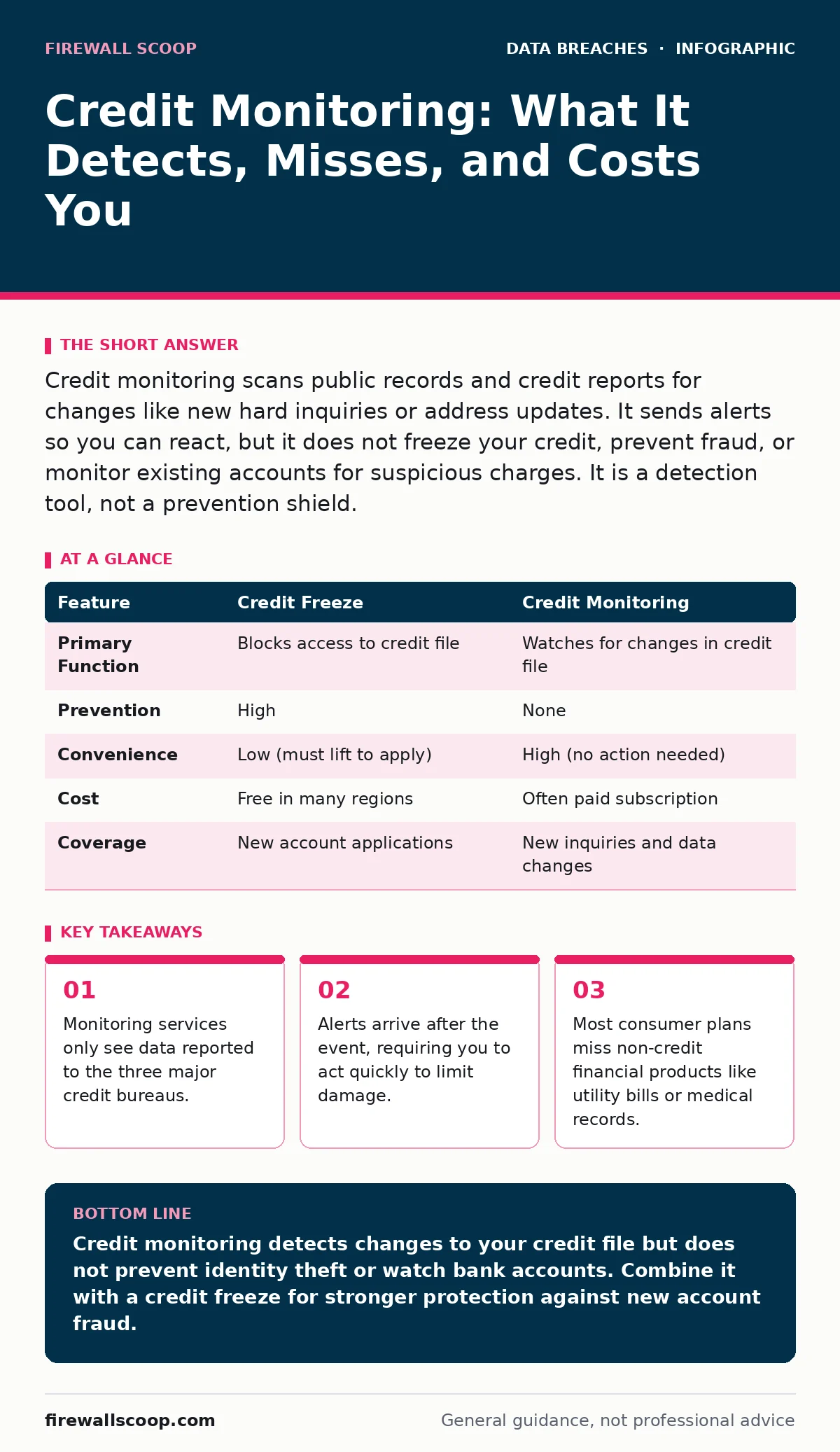
Credit monitoring scans public records and credit reports for changes like new hard inquiries or address updates. It sends alerts so you can react, but it does not freeze your credit, prevent fraud, or monitor existing accounts for suspicious charges. It is a detection tool, not a prevention shield.
Does credit monitoring actually prevent identity theft?
No, credit monitoring does not prevent identity theft. It is a detection service, not a prevention tool. The service scans your credit file for changes and sends you an alert. By the time you receive the notification, the fraudulent activity has already occurred. You must then contact creditors and bureaus to dispute the entry. Think of it as a smoke alarm rather than a fire extinguisher. The alarm warns you of danger, but it does not put out the fire.
What specific events trigger an alert?
Most services alert you when they detect a "hard inquiry" on your credit report. A hard inquiry happens when a lender checks your credit for a new loan or credit card application. You also receive alerts for changes to your personal information, such as a new address or phone number. Some services notify you if your Social Security number appears in public databases. However, these services do not see soft inquiries, which are routine checks by existing lenders or yourself.
Why did I get an alert for an account I never opened?
This usually means a fraudster used your personal data to apply for credit. The application reached the credit bureau, creating a hard inquiry. The monitoring service detected this change and notified you. It could also be a clerical error by the creditor or a data entry mistake by the bureau. You must verify the source of the inquiry immediately. If you did not apply, place a fraud alert or freeze to stop further attempts.
Does it monitor my bank accounts and spending?
Standard credit monitoring does not watch your bank accounts. It only looks at data reported to the credit bureaus. Most everyday spending, such as debit card purchases or cash withdrawals, is not part of your credit file. Therefore, if someone drains your checking account, the monitoring service will not see it. You need separate transaction monitoring from your bank for that protection. Understanding the difference between credit data and banking data is vital for your security strategy.
What happens if the monitoring service misses a breach?
Monitoring services rely on data feeds from credit bureaus and other sources. If a breach involves data not held by these partners, the service cannot alert you. For example, a breach of a utility company or a medical provider often goes unseen by credit monitors. These entities rarely report to credit bureaus. This gap is a significant blind spot. You should review our guide on employee data breaches to understand how internal leaks often bypass external monitoring tools entirely.
See also: Data Retention Policies: 8 Practices to Reduce Breach Impact · Password Hashing and Salting: Small Business Security Basics
Is a credit freeze better than monitoring?
A credit freeze is stronger for preventing new account fraud. It locks your credit file so lenders cannot access it without your permission. Monitoring leaves your file open but watches for activity. A freeze stops the problem at the source. However, you must temporarily lift the freeze to apply for legitimate credit. This adds friction to your financial life. Monitoring requires no action unless an alert triggers. Choose a freeze for maximum security and monitoring for convenience.
| Feature | Credit Freeze | Credit Monitoring |
|---|---|---|
| Primary Function | Blocks access to credit file | Watches for changes in credit file |
| Prevention | High | None |
| Convenience | Low (must lift to apply) | High (no action needed) |
| Cost | Free in many regions | Often paid subscription |
| Coverage | New account applications | New inquiries and data changes |
Can I monitor my children's credit?
Yes, and you should. Minors do not have active credit files, so any appearance of data is likely fraudulent. Identity thieves use children's clean records to build credit over years. This is known as "silent identity theft." You can request a credit report for your child from each bureau. Many monitoring services offer child-specific plans. These plans alert you if a file is created or updated. This early detection makes recovery much easier.
How much does this service actually cost?
Prices vary widely based on the depth of coverage. Basic plans that only check credit reports are often cheaper. Premium plans that include dark web scanning and identity restoration services cost more. Some banks or credit cards offer basic monitoring for free. Always check what is included in the free version. Free plans often lack identity restoration support, which helps you fix problems after a breach. If you rely on free tools, you must handle the cleanup yourself.
What data does the dark web scanner check?
These scanners look for your personal data on illicit forums and marketplaces. They search for email addresses, passwords, and Social Security numbers. Finding your data there means it was exposed in a past breach. This is different from credit monitoring, which looks at active financial activity. Dark web scanning tells you if your credentials are compromised. It does not tell you if they are being used right now. You should change any reused passwords immediately if your data appears.
Why do I still need alerts if I have a freeze?
A freeze blocks new credit applications, but it does not stop all fraud. It does not protect your existing accounts. If a thief accesses your current credit card or loan account, the freeze offers no protection. Monitoring can detect changes to existing accounts, such as address updates or credit limit changes. These changes can happen without a new hard inquiry. Combining a freeze with monitoring covers both new and existing account threats. This layered approach is more effective than either tool alone.
How long should I keep monitoring active?
There is no fixed end date for monitoring. Identity theft can happen years after a data exposure. Criminals often wait to use stolen data, letting it "cool off." Long-term exposure increases your risk window. Consider keeping monitoring active if you have had a breach in the past. You might also keep it active if you frequently share your data online. Review your data retention policies at work to see how long sensitive information is kept. Shorter retention reduces the window of opportunity for attackers.
Key takeaways
- Monitoring services only see data reported to the three major credit bureaus.
- Alerts arrive after the event, requiring you to act quickly to limit damage.
- Most consumer plans miss non-credit financial products like utility bills or medical records.
Credit monitoring detects changes to your credit file but does not prevent identity theft or watch bank accounts. Combine it with a credit freeze for stronger protection against new account fraud.
Frequently asked questions
Will credit monitoring hurt my credit score?
No. Monitoring services perform soft inquiries, which do not affect your score. Only hard inquiries from new applications can lower your score slightly.
Can I remove myself from credit monitoring lists?
You cannot opt out of being monitored, but you can opt out of pre-approved credit offers. Monitoring is a service you subscribe to, not a list you are on.
Does credit monitoring protect against SIM swap fraud?
No. SIM swap fraud targets your phone number, not your credit file. You need specific carrier protections and strong account passwords for that threat. Read our guide on SIM swap fraud for details.
What if I find my data on the dark web?
Change all passwords associated with that data immediately. Enable multi-factor authentication on those accounts. Monitor your financial statements for unusual activity.
How this guide was produced: written by the Firewall Scoop editorial team with AI assistance, checked against the public references listed below, and reviewed when the facts change. See our editorial policy or report an error.